

A whole-house renovation is the one project where the schedule genuinely decides how the months feel. A kitchen or a bathroom is a room you work around. A full renovation is the house itself, so knowing the programme before you start is what lets you plan the rest of your life around it.
Why The Whole Is Shorter Than The Sum Of Its Parts
People often add up the individual rooms and arrive at a frightening number. A kitchen at two to six weeks, two bathrooms at one to three weeks each, plus flooring and decoration, and the total looks like half a year.
It does not work that way, because the trades overlap. The electrician first-fixing upstairs is working while the plasterer finishes downstairs. The kitchen can be on order while the bathrooms are stripped out. A well-planned whole-house programme runs several rooms in parallel and only becomes sequential where one stage physically depends on another.
That overlap is why ten weeks can cover work that would take far longer booked room by room.
A Realistic Programme
The table below shows how the stages of a typical whole-house renovation fit together. The weeks overlap, so they do not add up to the total.
| Stage | Typical duration |
|---|---|
| Survey, design and specification | Before work starts |
| Strip-out and clearance | 3 to 7 days |
| Structural alterations, where needed | 1 to 2 weeks |
| First-fix plumbing and electrics | 1 to 2 weeks |
| Plastering and making good | 1 to 2 weeks, plus drying |
| Kitchen installation | 1 to 2 weeks |
| Bathroom and ensuite installation | 1 to 3 weeks each, usually overlapping |
| Flooring throughout | 3 to 7 days |
| Second fix, carpentry and skirting | 1 to 2 weeks |
| Decoration throughout | 1 to 2 weeks |
| Snagging and handover | 2 to 5 days |
Allowing for the overlap and for drying times between stages, most projects land between eight and sixteen weeks. Larger properties, or projects with significant structural work, run longer.
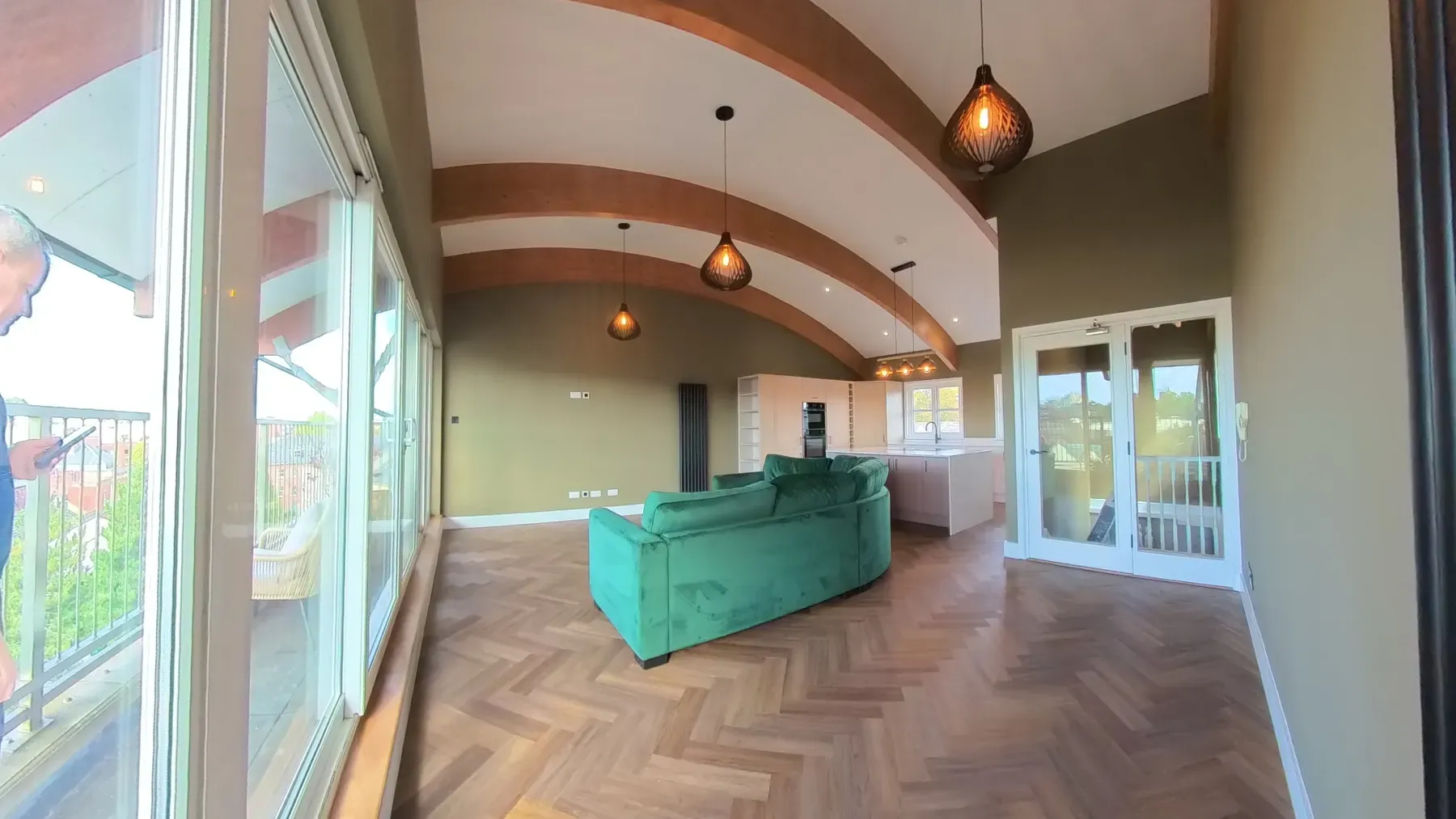
A recent full house renovation in Thorpe Hamlet, Norwich took ten weeks. That covered a new kitchen, a refurbished main bathroom, a new ensuite created by altering internal partitions, a bedroom converted into a utility room, herringbone LVT flooring through the ground floor, and plastering and decorating throughout.
Will You Live In It?
This is the single biggest variable, and it is worth deciding early rather than late.
Moving out lets the trades work through the house in sequence instead of around you. Rooms can be stripped in parallel, dust is not a daily problem, and nobody has to make a kitchen or bathroom usable again at the end of each day. On the Thorpe Hamlet project the homeowner moved out, and the ten week programme reflects that.
Staying put is entirely possible and many people do it, but it lengthens the programme. The work has to be phased so you always have a working bathroom and some way of making food, which usually means doing the house in halves rather than all at once. Expect that to add weeks rather than days.
There is no right answer. It is a trade-off between cost, disruption and time, and it is better made at survey stage than three weeks in.
What Makes A Whole-House Project Overrun
The causes are the same as any renovation, but the consequences compound because so many trades depend on each other:
- Materials arriving late. On a single room a late delivery delays that room. On a whole house it can stall three trades at once, because the people who were due to follow on have been booked elsewhere.
- Decisions still outstanding. Tiles, flooring, paint colours, handles, sanitaryware. Every undecided item is a stage that cannot be booked.
- What the strip-out reveals. Older properties across Norwich and Norfolk regularly turn up old wiring, failed damp proofing, rotten joists or pipework due for replacement. None of it is unusual and all of it takes time.
- Structural work added partway through. Deciding to remove a wall after first fix means revisiting work already done, and it brings building regulations approval into a programme that did not allow for it.
- Gaps between separately booked trades. This is the big one, and it is covered below.
Our renovation costs and pricing guide covers the budget side of the same question, including why a contingency matters more on a whole-house project than on a single room.
Why The Programme Matters More Than The Pace
On a whole-house renovation nobody wins time by working faster. The time is won or lost in the gaps.
When every trade is engaged separately, each one arrives when they are next free rather than when the house is ready for them. A three-day wait for a plasterer, repeated across four rooms, is a fortnight. Multiply that across the eight or nine trades a full renovation involves and the programme stops resembling anything that was agreed at the start.
When one company holds the programme, the plasterer is booked for the day the first fix finishes, the kitchen is ordered early enough to arrive when the room is ready, and the decorator is not standing in a house that is still being plastered. We cover this in more detail in why it pays to use one company for your renovation.
Planning A Whole-House Renovation
If you are working toward a date, such as moving in, a birth, or a sale, start the conversation considerably earlier than feels necessary. On a full renovation the design, the specification decisions and the lead times on kitchens and bathrooms all sit in front of the first day on site.
You can see how we handle whole-house projects on our home renovations page.
If you are considering a full house renovation in Norwich or the surrounding area, get in touch to arrange a survey and a realistic programme for your property.