

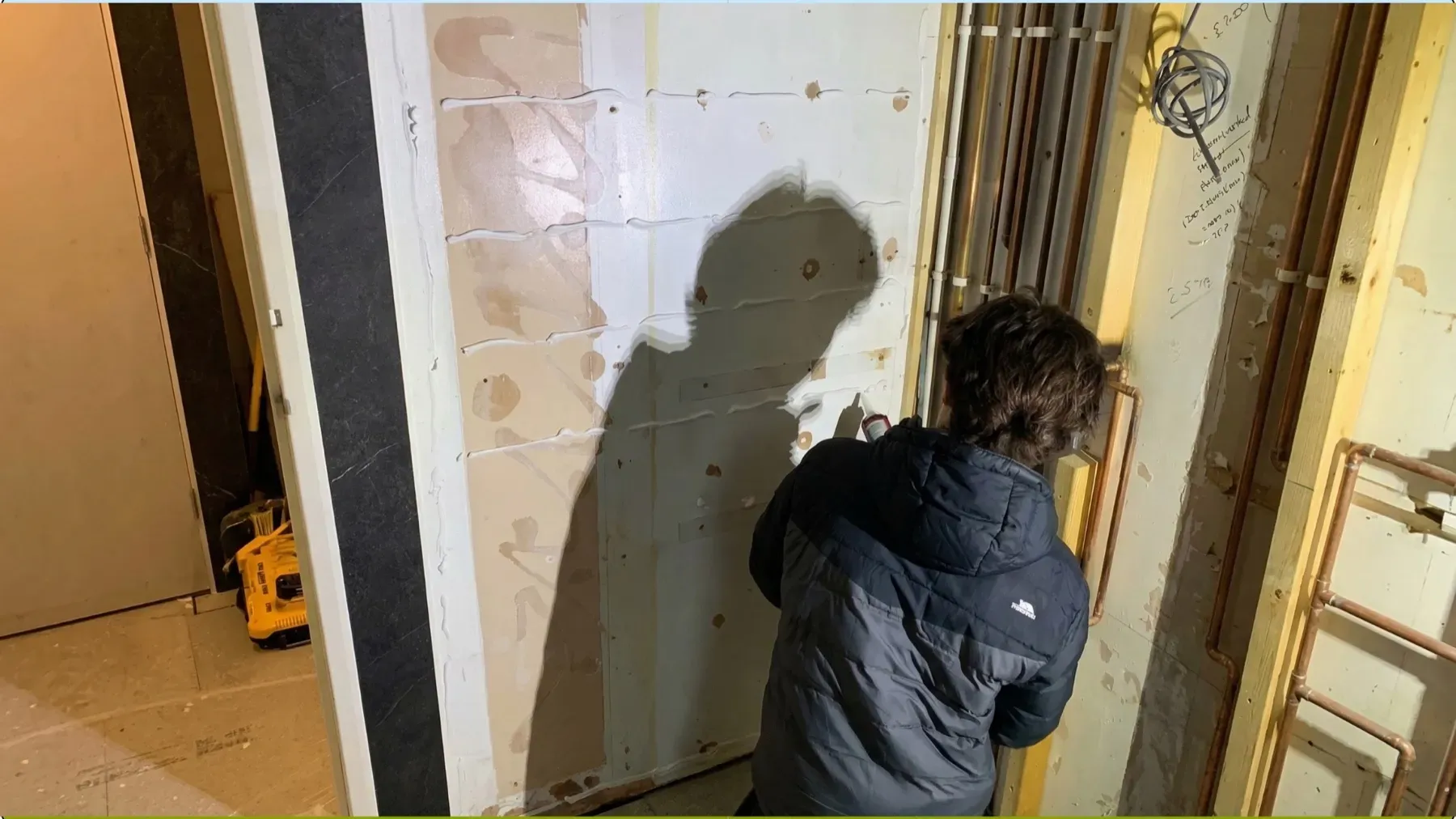
Renovating in the wrong order is one of the most expensive mistakes in home improvement, and it rarely looks like a mistake at the time. It looks like progress. The cost arrives later, when finished work has to be lifted, cut into or redone.
The Principle Behind The Order
Three rules explain almost every decision about sequencing:
- Anything buried goes in first. Pipework, cabling and anything else that ends up inside a wall or under a floor has to be in place before the surface that hides it.
- Dirty work comes before clean work. Strip-out, structural alterations and plastering create dust and mess. Anything that dust can ruin comes afterwards.
- Work from the top down. Ceilings before walls, walls before floors. Each stage protects the one below it from what the stage above drops on it.
Hold onto those three and most sequencing questions answer themselves.
The Order A House Should Follow
| Stage | Why it sits here |
|---|---|
| Survey, design and specification | Every later decision depends on knowing what the property will allow |
| Consents and approvals | Structural and notifiable work must be agreed before it begins |
| Strip-out and clearance | Nothing can be assessed properly until the old finishes are out |
| Structural alterations | Walls, openings and anything load-bearing come before the services that run through them |
| First-fix plumbing and electrics | These sit inside walls and floors, so they precede every surface |
| Plastering and making good | The last genuinely dirty stage, and it needs drying time afterwards |
| Joinery and carpentry | Doors, linings and anything fixed before decoration |
| Kitchen and bathroom installation | Needs plastered, dry rooms with services already run to the right places |
| Flooring | Late enough to avoid damage, early enough for skirtings to sit on it |
| Second fix and skirtings | Sockets, switches, handles, radiators and trim |
| Decoration | Close to last, once nothing dusty remains |
| Snagging and handover | The list of small items, done once everything else is finished |
The order is not rigid. On a specific project there are good reasons to move things. But every change should be a decision rather than an accident, and the reason should be better than one trade being available sooner than another.
Where Flooring Causes The Most Arguments
Flooring is the stage people most often get wrong, because there is a genuine choice to make.
Laying the floor before the kitchen means it runs cleanly under the units and appliances, and an integrated appliance can be removed years later without meeting a step where the floor stops. It also means protecting a finished floor through the rest of the installation.
Laying it after means less risk of damage, but the floor has to be cut around every unit, and that line is visible forever if the kitchen is ever changed.
On most of our projects the floor goes down first and is protected. On a recent full house renovation in Norwich the subfloors were prepared and the herringbone LVT laid before the kitchen was installed, for exactly that reason.
The Sequencing Mistakes That Cost Most
- Decorating before the plaster has dried. New plaster needs to dry fully before paint goes on, or the finish fails and the room needs doing again. This is the most common and most avoidable of the lot.
- Fitting the kitchen before the electrics are final. Moving a socket or adding a circuit for an induction hob after the units are in means cutting into finished walls.
- Flooring before plastering. Plaster splashes, and even covered, a new floor rarely survives a plastering stage unmarked.
- Bathroom sanitaryware before the waterproofing is complete. Everything behind a shower has to be right before anything is fixed in front of it.
- Leaving structural decisions until after first fix. Removing a wall later means revisiting the services that were run through it, and bringing in building regulations approval that the programme never allowed for.
- Snagging as you go rather than at the end. Small items get fixed, then damaged again by the stage that follows. One list at the end is faster than five lists throughout.
Why The Order Is Harder To Hold Than It Looks
Knowing the right order is the easy part. Holding it is where projects come apart.
The pressure to break the sequence almost always comes from availability. The tiler can come Thursday but the plastering will not be dry. The decorator has a gap next week but the second fix is not finished. Taking the slot feels like progress, and it is how finished work ends up being redone.
Holding the order means being able to say no to a trade who is free at the wrong moment, and having the next one booked for the right one. That is far easier when one company holds the whole programme than when each trade is engaged separately and every gap is yours to fill. We go into this further in why it pays to use one company for your renovation, and our guide to how long a full house renovation takes shows how the stages overlap in practice.
Planning Your Own Project
Most of the order is decided before anyone picks up a tool. A proper survey establishes what the property will allow, the specification settles what is being ordered and when, and the programme puts the two together.
You can see how we sequence projects on our home renovations page, and our renovation costs and pricing guide covers the budget side.
If you are planning a renovation in Norwich or the surrounding area, get in touch to arrange a survey.